


The gap between a beginner and an experienced player in Monster Hunter Wilds is not just skill. It is awareness, decision-making, and understanding how systems connect with each other.
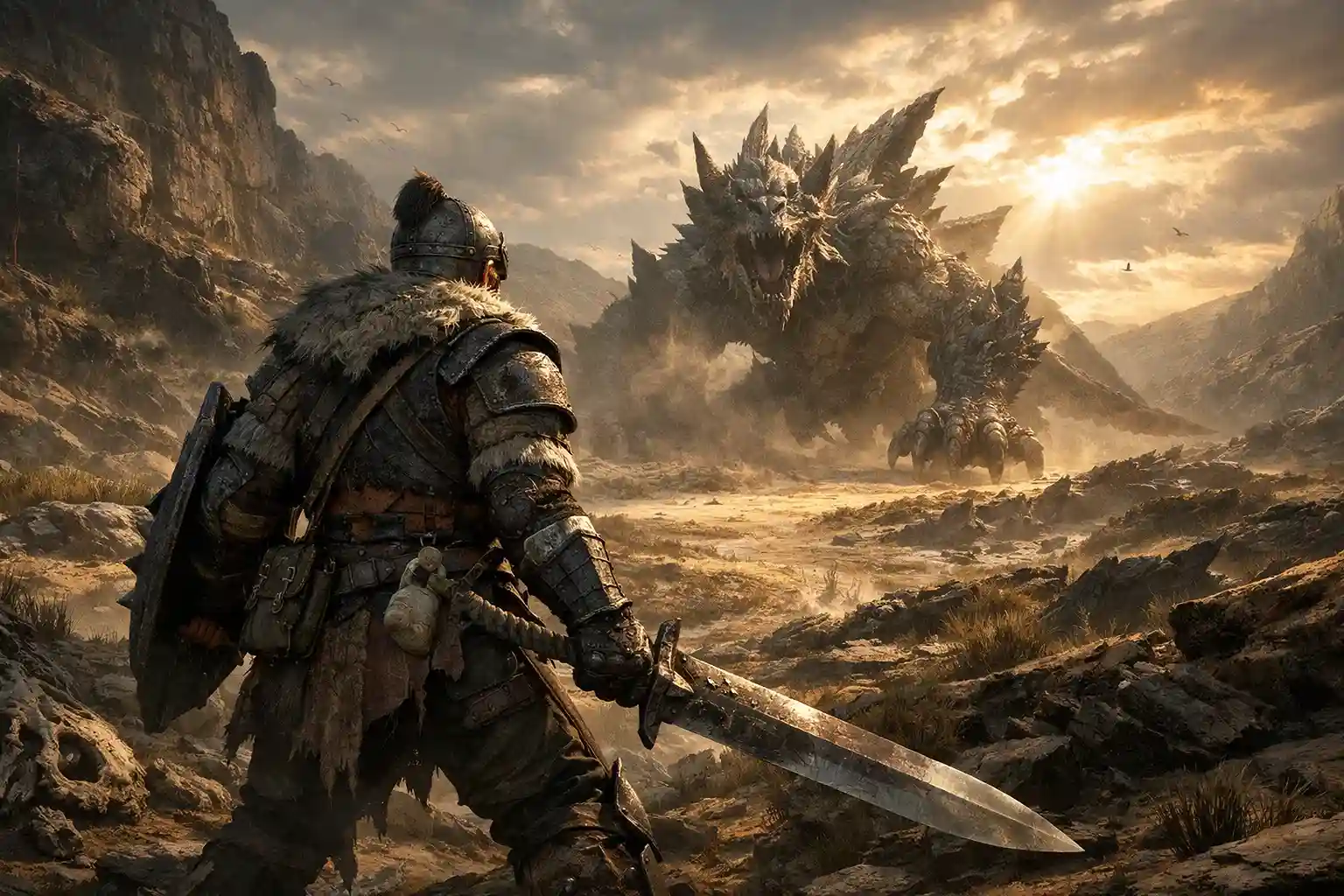
Experienced players do not simply attack more. They:
- Read monster patterns early
- Control positioning before engaging
- Use tools before problems appear
- Avoid unnecessary risks
Beginners often fall into predictable habits:
- Attacking without observing patterns
- Healing in unsafe situations
- Ignoring systems like mounts, items, and exploration
This guide focuses on improving your gameplay through practical, high-impact tips that directly affect your performance. The goal is not to make you faster. The goal is to make you more controlled and consistent.
Still winning fights but struggling to feel powerful or efficient? Once you apply these strategies, upgrading your build with Ultimate Strength Quest can significantly improve your damage output, survivability, and overall control during hunts.
Related Guides:
Monster Hunter Wilds Best Settings
Monster Hunter Wilds Tips and Trick
Choose a Weapon That Reduces Mistakes, Not Just One That Deals Damage
Most players ask which weapon is the best. That is the wrong approach.
The better question is:
Which weapon helps you learn faster and make fewer mistakes?
Long Sword: Best for Learning Combat Flow
The Long Sword simplifies your decision-making process.
- Focus on charging and releasing attacks
- Smooth combo transitions
- Encourages timing-based gameplay
What makes it valuable is how it teaches rhythm. You begin to understand when to attack and when to stop. This builds a strong foundation for all other weapons.
Sword and Shield: Best for Survival and Adaptability
This weapon is one of the safest options in the game.
- Use items without sheathing
- Quick movement and recovery
- Defensive blocking
The real strength is flexibility. You can attack, defend, and heal without breaking your flow. This reduces panic situations and helps you stay in control during fights.
Hammer: Best for Positioning and Precision
The Hammer looks simple but demands awareness.
- Focus on head positioning
- High stun potential
- Strong impact damage
To use it effectively, you must understand where the monster will be, not where it is. This develops predictive gameplay, which is a key skill at higher levels.
Light Bowgun: Best for Safe Learning and Observation
This weapon changes how you approach combat.
- Attack from distance
- Low commitment per shot
- Easier to track monster movement
You spend less time reacting and more time observing. This helps you learn patterns faster without constant pressure.
Core Rule for Weapon Choice
Pick one weapon and commit to it early.
Switching constantly slows your progress and wastes resources like Zenny.
Mastery of one weapon builds transferable skills that apply across the entire game.
Optimize Settings for Stability and Reaction Time
Settings are not about making the game look better. They are about making the game feel responsive.
If your screen does not match what is happening in real time, your decisions will always be late.
Recommended Core Settings
- Upscaling set to DLSS, FSR, or XeSS on Quality
- Frame Generation enabled if supported
- Motion Blur turned off
- Ray Tracing disabled
- Volumetric Fog set to low
- Shadow quality set to medium
Why These Settings Matter
Lower visual clutter improves clarity.
Higher FPS improves responsiveness.
Stable frame pacing improves timing.
Frame Rate Strategy
If your FPS is unstable, cap it at a consistent value such as 60 FPS.
Stable performance is more important than peak performance.
Consistency helps you react better during combat.
VRAM Management
High textures require high VRAM. If your system cannot handle it:
- Lower texture quality
- Avoid forcing maximum settings
This prevents stuttering and sudden frame drops during fights.
Loadouts Should Focus on Survival Systems First
Beginners often focus only on damage. This is a mistake.
The ability to survive longer leads to more learning, more opportunities, and better performance over time.
Seikret Is a Core Combat Tool
The Seikret is one of the most powerful systems in Monster Hunter Wilds.
It is not just for movement. It is part of combat and survival.
What You Can Do With Seikret
- Heal while moving
- Sharpen weapons safely
- Escape dangerous situations
- Reposition without pressure
Practical Example
Instead of healing in the middle of a fight:
- Mount Seikret
- Move away from the monster
- Heal safely
- Return to combat
This reduces risk and prevents chain mistakes.
Secondary Weapons Add Tactical Depth
Most players ignore their second weapon slot. This limits their options.
Smart Weapon Pairing
| Primary Weapon | Secondary Weapon | Purpose |
|---|---|---|
| Melee | Bow | Deal with flying monsters |
| Slow weapon | Fast weapon | Emergency mobility |
| Aggressive weapon | Defensive weapon | Recovery situations |
Key Insight
Your second weapon is not backup.
It is a tool for specific situations that your main weapon cannot handle.
Consumables Are Tools for Control, Not Just Healing
Items are often used too late. By the time players use them, the situation is already bad.
Essential Consumables
Dung Pods
- Push away extra monsters
- Prevent chaotic fights
Flash Pods
- Knock flying monsters down
- Create openings for damage
Nulberries
- Remove elemental effects
- Prevent damage over time
When to Use Items
- Before danger to prevent problems
- During danger to stabilize
- After danger to recover
Using items early keeps fights under control.
Exploration Is a Long-Term Advantage
Monster Hunter Wilds rewards players who explore.
Rushing the main path limits your progress.
Benefits of Exploration
- Find rare materials
- Discover hidden monsters
- Learn map layouts
- Unlock shortcuts
Exploration Strategy
- Avoid constant auto-travel
- Move through environments manually
- Pay attention to surroundings
Players who explore early struggle less later.
Smart Camp Placement Improves Efficiency
Camp placement affects your entire gameplay loop.
Best Camp Locations
- Near valuable resources
- Away from high-risk monster zones
- Close to traversal routes
Why It Matters
- Faster farming
- Safer respawn locations
- Reduced travel time
Good camp placement saves time across your entire playthrough.
Capture Creatures Early for Long-Term Rewards
Capturing is one of the most overlooked systems.
What to Capture
- Vigorwasps
- Thunderbugs
- Rare endemic creatures
Benefits of Capturing
- Unlock hidden quests
- Gain useful rewards
- Build passive progression
Capturing early creates advantages that build over time.
Learn Monster Behavior Instead of Reacting Late
Most beginners react after an attack starts.
Experienced players react before it happens.
How to Improve Monster Awareness
- Watch movement patterns
- Learn attack animations
- Identify safe zones around the monster
Example
Instead of reacting to a tail swipe:
- Notice the wind-up animation
- Move before the attack begins
This reduces damage and improves positioning.
The Real Skill Gap Is Decision Chains
One mistake does not cause failure.
A chain of bad decisions does.
Example of a Bad Decision Chain
- Panic
- Heal in open
- Get hit again
- Panic again
Example of a Good Decision Chain
- Disengage
- Reposition
- Heal safely
- Re-engage with control
Key Insight
You do not need perfect gameplay.
You need better decisions after mistakes.
Conclusion
Monster Hunter Wilds becomes easier when you focus on control instead of speed.
- Use one weapon consistently
- Optimize settings for stable performance
- Use tools before problems appear
- Explore the world fully
- Make better decisions during combat
Once these fundamentals are in place, the game becomes less chaotic and more predictable.
That is when real improvement begins.
FAQ (Monster Hunter Wilds Tips & Tricks)
What makes a player good in Monster Hunter Wilds?
The ability to make consistent and correct decisions based on monster behavior and positioning.
What is the best beginner weapon?
Sword and Shield is the most balanced and forgiving option for beginners.
Why is Seikret important?
It allows safe healing, repositioning, and reduces risk during combat.
Should beginners focus on damage builds?
No. Survivability and consistency are more important in the early game.
Do settings really impact gameplay?
Yes. Optimized settings improve performance, visibility, and reaction time.