


There are 12 maps in Valorant in 2026 — and seven of them are in your ranked queue right now. Each one plays differently. Each one rewards different agents, different strategies, and different mechanical skills. If you’re playing all seven with the same comp and the same gameplan, you’re leaving wins on the table.
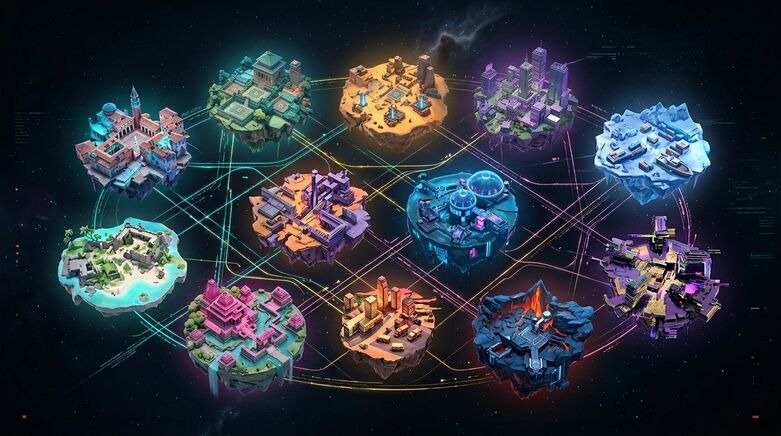
This guide covers every map in Valorant — key locations, attack and defense strategies, the best agents for each map, the current Act 3 competitive pool, TDM maps, and the full history of how the rotation has changed in 2026.
Struggling to climb on the current map pool? Our Valorant Boosting Service has Immortal-tier players ready to push your rank — safe, fast, and guaranteed.
Related Guides:
- How to Climb Ranked in Valorant
- Best Team Comps for Every Valorant Map
- Valorant Season 2026 Act 3 Ranked Mode Guide
Current Valorant Competitive Map Pool — Season 2026 Act 3
Riot confirmed the Act 3 map rotation on April 21, 2026 via the official Valorant Twitter account. Ascent returned to competitive play, replacing Bind. The update went live with Patch 12.08 on April 29, 2026.
| Map | Status | Sites | Key Mechanic |
|---|---|---|---|
| Ascent | ✅ In rotation (returned Act 3) | 2 | Mechanical bomb doors on both sites |
| Breeze | ✅ In rotation | 2 | Widest open sightlines — Operator map |
| Fracture | ✅ In rotation | 2 | Attackers spawn on both sides — zip lines |
| Haven | ✅ In rotation | 3 | Only three-site map in the current pool |
| Lotus | ✅ In rotation | 3 | Rotating stone doors — three sites |
| Pearl | ✅ In rotation | 2 | No dynamic mechanics — pure fundamentals |
| Split | ✅ In rotation | 2 | Vertical map — Heaven control decides rounds |
| Bind | ❌ Removed (Patch 12.08) | 2 | Teleporters — still in casual modes |
Removed maps — Bind, Corrode, Abyss, Sunset, Icebox — remain fully playable in Unrated, Swiftplay, Spike Rush, and Escalation. Only Competitive and Unrated use the seven-map rotation.

Valorant Map Tier List — Season 2026 Act 3
Based on community feedback, pro play data, and win rate statistics from vstats.gg as of June 2026. This reflects the current competitive experience — not personal preference.
| Tier | Maps | Why |
|---|---|---|
| S — Best Maps | Ascent, Haven | Balanced design, high skill expression, consistent pro meta |
| A — Strong Maps | Split, Lotus | Rewarding for coordinated teams, strong agent variety |
| B — Situational | Fracture, Pearl | Polarizing — punishes some comps harder than others |
| C — Community Frustration | Breeze | Heavily punishes non-Operator comps, frustrating for lower ranks |

All 12 Valorant Maps — Full Guide
Corrode — Valorant’s Newest Map (2026)
Release date: Season V25 Act 4 — Patch 11.00 (October 2025)
Setting: Omega version of Mont-Saint-Michel, France — a post-First Light salt extraction facility surrounded by vast salt flats
Sites: A and B — two-site, three-lane layout
Corrode is Valorant’s 12th and most recent map. The layout balances tight hallways that open up into much wider angles, with elevation changes and shallow water paths that punish noisy movement. Medieval industrial aesthetic with a unique audio layer — footsteps in the water are audible, so positioning near water channels tells your enemies exactly where you are.
Key Locations: A Crane (vertical control over A Site), B Tower (primary defender anchor on B), Mid Window (controls flow to both sites), A Main and B Main (primary attack routes)
Attacker strategy: Mid control is the priority. Use recon agents — Fade, Sova, or Vyse — to clear corners and create space before committing to a site. Split attacks from Mid to A or B force defenders into uncomfortable rotations.
Defender strategy: Anchor near A Link, B Tower, or Mid Window. Sentinel agents like Veto, Cypher, and Killjoy thrive here with traps and lockdowns. Don’t overextend — let attackers walk into crossfires and retake with coordinated utility.
Best agents: Fade, Sova, Killjoy, Cypher, Omen, Veto
Abyss — No Walls, No Safety Net
Release date: June 11, 2024 — Patch 8.11
Setting: Clandestine base buried within an endless chasm
Sites: A and B — reworked in a recent patch
Abyss is the only map in Valorant with no walls on the outer edges. Fall off the side and you die. This borderless design forces vertical awareness on every angle — enemies can peek from positions that don’t exist on any other map. The reworked version tightened the layout slightly but the core identity remains: elevation control and unconventional positioning win rounds here.
Key Locations: A Tower (vertical control over A Site), Mid zip lines (rotation point), B Long (primary defender hold on B), A Main and B Main (attack entries)
Attacker strategy: Mobile agents — Jett, Raze, Omen — take high-ground spots early. Mid control determines which site you execute. A Tower control often decides the entire attacker half.
Defender strategy: Play near vertical structures and punish attackers who over-extend toward the edges. Agents who can punish elevated positions from range are especially strong here.
Best agents: Jett, Raze, Omen, Chamber, Cypher, Breach
Sunset — The Mid-Control Map
Release date: August 29, 2023 — Patch 7.4
Setting: Los Angeles, California
Sites: A and B — mid-centered layout with a breakable door at B Market
Sunset plays like a spiritual crossover between Ascent and Split. Mid Courtyard is everything — teams that control it can split either site at will and force defenders into uncomfortable repositions. The B Market breakable door creates a strategic variable that changes how both teams play the B side.
Key Locations: A Heaven (primary defender hold on A), Mid Courtyard (central control zone), B Market breakable door (rotational variable), A Elbow (alternative A entry)
Attacker strategy: Take Mid early. Smoke A Heaven and B Backsite to deny defensive peeks. Once Mid is controlled, decide A or B based on defender rotation reads.
Defender strategy: If attackers don’t take Mid early, their entry options narrow dramatically. Use Sage walls or Cypher tripwires to deny early Mid control and punish aggressive pushes.
Best agents: Omen, Cypher, Sage, Jett, Sova, Breach
Lotus — The Three-Site Rotation Map
Release date: January 10, 2023 — Patch 6.0
Setting: Ancient Indian temple complex
Sites: A, B, and C — one of two three-site maps in the current competitive pool
Lotus is one of only two three-site maps in Valorant. Rotating stone doors on A Tree and C Main add a strategic layer that makes defender rotations unpredictable — the doors work both ways, and using them creates audio cues. The three-site design forces defenders to make hard commitment decisions every round while giving attackers multiple angles to probe.
Key Locations: A Main and A Tree (attacker entries), B Site center (smallest, quickest plant), C Main and C Hall (C push routes), rotating doors at A Tree and C Main
Attacker strategy: Use rotating doors to set up unpredictable site hits. Initiators like Breach and Skye clear tight spaces efficiently. Faking one site and rotating through the doors can catch defenders completely flat-footed.
Defender strategy: Anchor mid rotation points and move fast. Cypher and Killjoy close out flank routes efficiently. Don’t over-commit to one site too early — three sites spread defenders thin.
Best agents: Breach, Skye, Killjoy, Cypher, Omen, Viper
Pearl — Pure Fundamentals
Release date: June 22, 2022 — Patch 5.0
Setting: Underwater city, Atlantic Ocean
Sites: A and B — standard three-lane layout with no dynamic mechanics
Pearl is the purest fundamentals test in Valorant. No teleporters, no doors, no zip lines — just crosshair placement, utility usage, and team coordination. Mid Plaza is the map’s heartbeat. Whoever controls it pressures both sites simultaneously and creates rotational advantage that the team without Mid simply cannot overcome.
Key Locations: A Tower and A Secret (defender anchors), B Tower and B Hall (defender holds on B), Mid Plaza (central control), A Main and A Link (attack routes)
Attacker strategy: Early aggressive Mid pushes force uncomfortable defensive rotations. Fade and Sova are excellent for information gathering before committing. Don’t respect Mid — take it.
Defender strategy: Passive setups and utility-heavy defenders suppress Mid pushes efficiently. Holding Mid Plaza denies attackers the map split that makes Pearl’s sites accessible.
Best agents: Fade, Sova, Viper, Jett, Killjoy, Omen
Fracture — Surrounded Defenders
Release date: September 8, 2021 — Patch 3.05
Setting: Kingdom research facility in the American Southwest
Sites: A and B — H-shaped layout, attackers spawn on both sides
Fracture is the most structurally unique map in Valorant. Attackers spawn on both ends of the H-shaped layout, meaning defenders are surrounded from round one. The zip lines in the middle provide fast attacker rotations between both sides. Four ultimate orbs instead of the standard two give attackers a persistent economy advantage on this map.
Key Locations: A Rope (vertical attack angle on A), B Tower (primary defender hold), Zip lines in Mid (attacker rotation tool), A Drop and A Main (dual A approach)
Attacker strategy: Coordinate simultaneous pushes from both sides. Cut off defender rotations by controlling key pathways near Spawn early. The zip lines allow instant cross-map repositioning.
Defender strategy: Aggressive early map control prevents attackers from encircling positions. Early picks and rapid rotations can collapse attacker coordination before they establish the pincer.
Best agents: Raze, Breach, Brimstone, Killjoy, Skye, Fade
Breeze — Wide Open, Long-Range Dominant
Release date: April 27, 2021 — Patch 2.08
Setting: Remote tropical island facility
Sites: A and B — largest map in the current competitive pool
Breeze is the widest, most open map in Valorant. Long sightlines dominate every lane. The Operator is more valuable here than on any other map in the current pool — and teams without a dedicated Operator player consistently struggle on Breeze. Mid control through Mid Bomb doors and Mid Pillar is the most contested real estate on the map.
Key Locations: A Pyramids (cover on A Site), B Backsite and B Platform (defender holds), Mid Bomb doors (central control), A Cave (alternative A entry)
Attacker strategy: Smokes are essential — shut down A Main and B Site angles before pushing. Early Mid control creates split attack opportunities. Operator or Vandal long-range setups dominate the lanes.
Defender strategy: Position Operators on Mid and B Site to control attacker movement. Slow pushes with utility — Breeze’s open spaces make retakes incredibly difficult once a site is taken.
Best agents: Chamber, Jett, Viper, Fade, Sova, Omen
Icebox — Vertical Combat
Release date: October 13, 2020 — Patch 1.10
Setting: Arctic research base in Russia
Sites: A and B — elevated plant zones, zip lines, heavy verticality
Icebox is the most vertically complex map in Valorant. Both A and B sites have elevated plant zones. Zip lines in Mid provide fast repositioning. Nest (Rafters) on A gives a dangerous aerial overwatch angle. The map rewards players who understand three-dimensional positioning and punishes those who play purely at ground level.
Key Locations: A Nest/Rafters (overwatch angle), Yellow container (mid-site cover on B), Kitchen and Tube (Mid rotation spots), A Pipes and B Main (attack entries)
Attacker strategy: Smokes and walls suppress sightlines before pushing. A Main and B Main both require clearing Nest or Yellow before the site is safely approachable. Vertical angles reward aggressive entry fraggers.
Defender strategy: Operator players thrive here holding deep angles. Sage walls at Default plant spots significantly delay execution. Delay the plant as long as possible — post-plant retakes are manageable with the right positioning.
Best agents: Sage, Chamber, Sova, Killjoy, Omen, Reyna
Ascent — The Balanced Classic
Release date: June 2, 2020 — Patch 1.0
Setting: Venice, Italy
Sites: A and B — mechanical bomb doors, true mid courtyard
Ascent is widely considered the best-designed map in Valorant — balanced, mechanically rich, and endlessly deep. The Mid Courtyard is the only true “open mid” in the game. Bomb doors on both sites give defenders a tactical variable that completely changes how sites are approached. Ascent returned to the Act 3 competitive pool after being absent since Patch 11.08 in October 2025.
Key Locations: A Heaven and A Generator (defender holds on A), B Boathouse and B Default boxes (B Site cover), Top Mid and Mid Plaza (central control), A Tree (Mid-to-A rotation route)
Attacker strategy: Spread early, take Mid, then commit A via Tree or B via Market based on rotation reads. Force the site doors to close defenders into predictable defensive angles.
Defender strategy: Use doors to control time and space — they’re the strongest mechanical advantage on the map. A Sentinel anchoring Mid can track rotations and force predictable attacker pathing.
Best agents: Jett, Sova, Killjoy, Omen, Reyna, Sage
Haven — The Three-Site Original
Release date: April 7, 2020 — Beta
Setting: Bhutan monastery complex
Sites: A, B, and C — the first three-site map ever in Valorant
Haven is the original three-site map and has been in competitive rotation for most of Valorant’s history. Three sites spread defenders thin and give attackers genuine decision-making complexity. Garage control is the most impactful early-round investment — it opens C immediately and forces B defenders to make uncomfortable choices. Courtyards and traditional architecture create constant flanking opportunities.
Key Locations: A Heaven (elevated A Site hold), C Long (longest sightline on the map), Garage (mid-map control zone), B Main and Garage Window (B approach routes)
Attacker strategy: Pressure multiple sites simultaneously to stretch the defense. Garage control opens C for free. Initiators like Sova and Skye clear corners, mobile duelists like Jett and Neon enable fast site rotation.
Defender strategy: Gather early information and anchor key areas. A Sentinel on C solo-holds while others manage A and B. Operator on C Long or A Long deters early lane aggression. Smokes at A Long and C Long buy rotation time.
Best agents: Sova, Skye, Killjoy, Cypher, Omen, Jett
Bind — Teleporter Map
Release date: April 7, 2020 — Beta
Setting: Moroccan desert facility
Sites: A and B — no mid lane, teleporters replace it
Bind was removed from the Act 3 competitive pool with Patch 12.08 but remains in all casual modes. The map has no mid lane — two teleporters connect the sites instead. One links A Short to B Short near Hookah, the other connects B Long to A Lobby. Teleporters create mind games and fast rotations but alert all players when used — the audio cue is the entire strategic layer of the map.
Key Locations: A Showers/Short (A entry), Hookah (B entry), B Long (primary B approach), A Lamps and A Heaven (defender holds)
Attacker strategy: Use teleporters to force uncomfortable rotations. Pressure both sites then rotate using teleporters to catch defenders mid-rotation. Raze and Viper are powerful here for zoning.
Defender strategy: Control chokepoints early. One-way smokes on A Short or a Sage wall in Hookah delay site takes. Always listen for teleporter sounds — quick rotation wins rounds.
Best agents: Raze, Viper, Sage, Cypher, Lina, Skye
Split — Vertical Bottleneck Map
Release date: April 7, 2020 — Beta
Setting: High-tech business district, Tokyo, Japan
Sites: A and B — vertical map with bottlenecks and Heaven control
Split is one of the most reworked maps in Valorant history. Originally pulled from competitive play in Episode 5 for being too defender-sided, the reworked version gives attackers more viable entry options while keeping the vertical, Heaven-control identity intact. Mid is the key battleground every round — attackers who don’t control it find both sites locked down hard.
Key Locations: A Heaven and B Heaven (elevated defender control), Mid Vent (Mid-to-A-Heaven rotation), B Alley/Garage (alternate B entry), A Ramps (primary A approach)
Attacker strategy: Mid control is non-negotiable — without it, site takes become extremely difficult. Smoke Heaven angles before executing. Breach and Phoenix flash defenders off crucial elevated positions.
Defender strategy: Hold B Heaven and A Heaven as long as possible. Sage wall in Mid delays pushes, Cypher or Killjoy setups lock sites. When Mid is lost, retake with crossfire setups out of spawn and Heaven positions.
Best agents: Breach, Phoenix, Sage, Killjoy, Cypher, Omen

Valorant Team Deathmatch Maps
There are five dedicated Team Deathmatch maps in Valorant. These are purpose-built for fast combat and warm-up practice — none of them appear in Competitive, Unrated, or Premier. They’re available exclusively in the TDM mode.
| Map | Setting | Best Use |
|---|---|---|
| District | Urban city block | General warm-up, crosshair placement practice |
| Kasbah | North African marketplace | Close-range mechanics and corner clearing |
| Piazza | Italian town square | Mid-range dueling and movement practice |
| Drift | Japanese industrial zone | Long-range aim training and Operator practice |
| Glitch | Chaotic digital environment | Fast-paced reflexes and tracking aim |
TDM maps are the best warm-up tool in Valorant. 10-15 minutes on any of these before ranked queuing noticeably sharpens aim, movement, and reaction speed. District and Kasbah are the most popular choices for pre-game warm-up in the community.
How Valorant Map Rotation Works in 2026
Valorant keeps exactly seven maps in the competitive rotation at all times. This number has been fixed since Episode 5 — seven is the sweet spot for variety without overwhelming players on the number of maps they need to master.
Seven maps also serves pro play perfectly. A best-of-three format allows both teams to ban two maps each and play one remaining map. A best-of-five allows two bans each with a fifth map decider if needed — no map ever repeats in a series.
Starting with Patch v10.00 in Season 2025 Act 1, Riot updates the rotation every Act rather than every Episode. This means up to six rotation changes per year — faster than the old three-changes-per-year pace under the Episode format. The system now feels responsive to community feedback and pro play data simultaneously.
Removed maps always stay available in Unrated, Swiftplay, Spike Rush, and Escalation. No map is ever permanently retired — they cycle back in when the meta and rotation benefit from their return.
Complete Valorant Map Release History
| Map | Release Date | Patch | Setting |
|---|---|---|---|
| Bind | April 7, 2020 | Beta | Morocco |
| Haven | April 7, 2020 | Beta | Bhutan |
| Split | April 7, 2020 | Beta | Tokyo, Japan |
| Ascent | June 2, 2020 | Patch 1.0 | Venice, Italy |
| Icebox | October 13, 2020 | Patch 1.10 | Arctic Russia |
| Breeze | April 27, 2021 | Patch 2.08 | Tropical island |
| Fracture | September 8, 2021 | Patch 3.05 | American Southwest |
| Pearl | June 22, 2022 | Patch 5.0 | Underwater Atlantic |
| Lotus | January 10, 2023 | Patch 6.0 | India |
| Sunset | August 29, 2023 | Patch 7.4 | Los Angeles |
| Abyss | June 11, 2024 | Patch 8.11 | Endless chasm |
| Corrode | October 2025 | Patch 11.00 | Mont-Saint-Michel, France |
Conclusion
Valorant has 12 maps in 2026 — and the current Act 3 pool of Ascent, Breeze, Fracture, Haven, Lotus, Pearl, and Split is one of the most diverse rotations the game has had. Two three-site maps, a surrounded-defender layout, the widest open map in the game, and the most balanced classic. Here’s the quick reference before you queue:
- Current ranked pool: Ascent, Breeze, Fracture, Haven, Lotus, Pearl, Split
- Removed in Act 3: Bind (still in casual modes)
- Newest map: Corrode (Patch 11.00, October 2025) — currently in casual modes
- Three-site maps: Haven and Lotus — both in the current pool
- Best map for fundamentals: Ascent — rewards mechanical precision more than any other
- Hardest map pool map: Breeze — Operator-heavy, punishes non-sniper comps
- TDM warm-up: District or Kasbah — 10 minutes before ranked makes a noticeable difference
FAQ
How many maps are in Valorant in 2026?
There are 18 total playable maps in Valorant in 2026 — 12 standard plant-and-defuse maps, 5 Team Deathmatch-only maps, and 1 practice range. The competitive pool keeps 7 of the 12 standard maps in ranked rotation at any time.
What is the current Valorant competitive map pool in 2026?
The current Valorant competitive map pool for Season 2026 Act 3 is Ascent, Breeze, Fracture, Haven, Lotus, Pearl, and Split. Ascent returned with Patch 12.08 on April 29, 2026, replacing Bind. This pool applies to Competitive, Unrated, and Premier modes.
What is the newest Valorant map in 2026?
Corrode is the newest Valorant map, introduced in Season V25 Act 4 with Patch 11.00 in October 2025. It’s set on the Omega version of Mont-Saint-Michel in France and features tight hallways that open into wide angles, elevation changes, and shallow water paths that punish noisy movement.
Why was Bind removed from the Valorant competitive pool?
Bind was removed from the competitive rotation with Patch 12.08 to make room for Ascent’s return in Act 3. Bind remains playable in all casual modes including Swiftplay, Spike Rush, Escalation, and Unrated. Riot rotates maps out periodically to keep the ranked experience fresh and balanced.
How often does the Valorant map pool change?
Since Patch v10.00 in Season 2025 Act 1, Riot updates the Valorant competitive map rotation every Act. With six acts per year under the current Season structure, the pool can change up to six times annually — compared to three times per year under the old Episode format.