


Here’s something most Rocket League guides skip over: every car in the game handles identically on paper. Same speed, same boost, same turn radius. So why does literally everyone at high rank use Octane or Fennec? And why would picking the wrong car actually hold you back?

The answer is hitboxes. And once you understand them, car selection goes from a cosmetic choice to one of the most important decisions you make in ranked. This guide covers all six hitbox types, the best cars in the current 2026 meta, pro usage data from the RLCS 2025 World Championship, how to get each one, and which car actually makes sense for your rank and playstyle.
Want to climb faster while you’re getting comfortable with your new car? Our Rocket League Boosting Service has pro players ready to push your rank — Safe, Fast, Guaranteed.
Related Guides:
Why Car Choice Actually Matters — Hitboxes Explained
Every car in Rocket League is assigned one of six invisible collision zones called hitboxes. These hitboxes — not the visual model — determine how your car actually interacts with the ball. Two cars that look completely different can share the exact same hitbox and play identically. Two cars that look similar can have different hitboxes and feel completely different under your fingers.
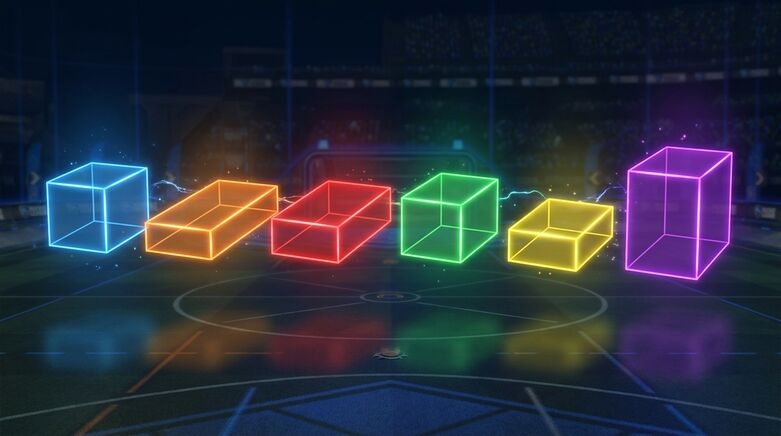
Each car body in Rocket League uses one of six default body types, called hitboxes. All cars have the same stats, but each hitbox has small differences in length, width, and height. Those differences directly affect aerial control, dribbling, shot power, 50/50 challenges, and flip mechanics.
| Hitbox | Length | Width | Height | Best For |
|---|---|---|---|---|
| Octane | 118.01 | 84.20 | 36.16 | All-around — dribbling, aerials, challenges |
| Dominus | 127.93 | 83.28 | 31.30 | Flicks, power shots, ground play |
| Breakout | 131.49 | 80.53 | 30.30 | Pinches, power shots, precision |
| Hybrid | 127.02 | 82.19 | 34.16 | Flip resets, balanced between Octane and Dominus |
| Plank | 128.82 | 84.67 | 29.39 | Ceiling shots, ground flicks, flat aerials |
| Merc | 76.71 (w) | 76.71 | 41.66 | Disruption, defensive clearances |
One critical point: Octane cars win 50/50s more often due to rounded collision models. Dominus and Plank cars land faster because of their low profile. Hybrid cars offer consistency in flip resets due to flat contact surface.
Rocket League Car Tier List 2026
| Tier | Cars | Why |
|---|---|---|
| S — Meta Picks | Octane, Fennec | Best hitbox, visual clarity, used by 90%+ of pro players |
| A — Excellent | Dominus, Breakout, Endo, Takumi | Specialist hitboxes with high competitive ceiling |
| B — Solid | Batmobile, Mantis, Nimbus, Twinzer | Strong in specific playstyles — not as versatile |
| C — Niche | Merc, Marauder, Aftershock | Off-meta hitboxes — hard to optimise for ranked |
S-Tier — The Cars That Dominate Every Rank
1. Octane — The Best Car in Rocket League
Octane is the best car in Rocket League in 2026. It’s been the best car in Rocket League since competitive play became serious, and the meta hasn’t changed that verdict. RLCS 2025 World Champion BeastMode used the Octane to dominate with mechanical creativity. Perfect for players who value field visibility and instinctive feel over strict visual alignment.

The Octane hitbox is the tallest in the game at 36.16 — that extra height gives more room for controlling dribbles and ground challenges that shorter hitboxes lose. Its rounded collision model wins more 50/50 situations than flat cars and the shorter body makes aerial adjustments faster and more forgiving than longer hitboxes.
It’s a default car, unlocked from the very start. It costs nothing. And it’s the same car that the world’s best players use in the biggest tournaments. That should tell you everything.
Hitbox: Octane | How to get: Free — default car | Best for: All ranks, all playstyles
2. Fennec — Best Visual Alignment in the Game
Fennec uses the exact same hitbox as Octane — same dimensions, same collision zones, same mechanics. So why is it the second most popular car at the highest levels of play? Players often feel like Fennec gives more readable corners, a flatter front, and easier contact judgment, even though it is not statistically better than Octane.
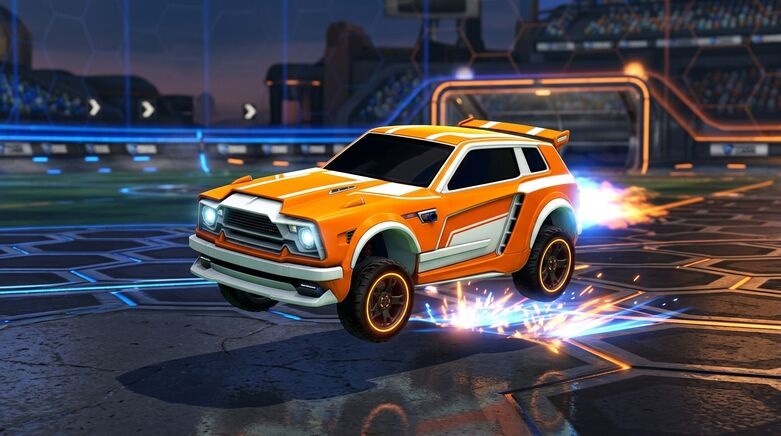
The difference is visual. Fennec’s blockier, more squared-off design means the car’s visible edges align almost perfectly with the actual collision box. For players who struggle with spatial awareness or want instant feedback on ball contact points, Fennec eliminates the slight visual disconnect that Octane sometimes creates.
It’s not better than Octane on paper. But for a lot of players, the improved visual feedback translates to genuinely better ball contact in practice. NRG’s Daniel and Team BDS stars rely on the Fennec for its precision.
Hitbox: Octane | How to get: Item Shop (credits), trading, blueprints | Best for: Players who want cleaner visual hitbox feedback
A-Tier — Excellent Specialist Picks
3. Dominus — Best for Flicks and Power Shots
If Octane is the all-rounder, Dominus is the specialist. Dominus is a close third-place. It has a longer body — around 127.93 length compared to Octane’s 118.01, so it gives more reach on flicks, redirects, aerial touches, and power shots. Its 31.30 height makes it flatter than Octane, which helps with scoops, flicks, and sharper ball contact.

The trade-off is that lower profile means 50/50s are harder against taller cars. The height is also its main downside, because in 50/50 situations, taller cars can just push the ball over your nose, so you gotta play more offensively. Dominus players tend to play aggressively — using the long body and flat roof for devastating ground flicks that Octane can’t replicate as easily.
Dominus is considered the “Big Three” alongside Octane and Fennec by the competitive community. It’s a strong A-tier choice and the go-to for players who build their game around flick mechanics.
Hitbox: Dominus | How to get: Item Shop (credits), trading | Best for: Flick-heavy playstyle, offensive ground game
4. Breakout — Precision and Power Shot Specialist
Breakout has the longest hitbox in the game at 131.49 — even longer than Dominus. That reach makes it exceptional for pinches, redirects, and powerful accurate shots. Players who enjoy creative mechanics and freestyling often gravitate toward it. That said, it isn’t the most versatile option. Its shape can make dribbling and aerial control less consistent than Octane or Fennec.

Breakout is a specialist’s pick. If you love ground pinches and ceiling shots where raw power and precision matter more than versatility, Breakout rewards you like no other hitbox. It’s a default car available from the start — so there’s no reason not to try it and see if it clicks with your playstyle.
Hitbox: Breakout | How to get: Free — default car | Best for: Power shots, pinches, freestyling
5. Endo — Best Hybrid Hitbox Option
The Hybrid hitbox splits the difference between Octane and Dominus — slightly longer and flatter than Octane but not as flat as Dominus. It’s widely considered the best hitbox for flip resets because the flat contact surface creates more consistent, predictable contact when attempting advanced aerial mechanics.

Endo is the most popular Hybrid hitbox car and has a loyal following among mechanical players who find Octane’s height slightly awkward for reset-heavy playstyles. It won’t replace Octane for most players but for those who grind advanced mechanics specifically, Hybrid cars offer a genuine edge.
Hitbox: Hybrid | How to get: Item Shop (credits), trading, blueprints | Best for: Flip resets, advanced aerial mechanics
B-Tier — Solid Picks With the Right Playstyle
6. Batmobile — The Plank Hitbox Classic
The Batmobile uses the Plank hitbox — the widest and flattest in the game at 84.67 width and just 29.39 height. That extreme flatness makes it a beast for ceiling shots, precise aerial shots, and powerful ground flicks. With one of the flattest and longest hoods in the game, it’s perfect for ceiling shots, ground flicks, and powerful clears.
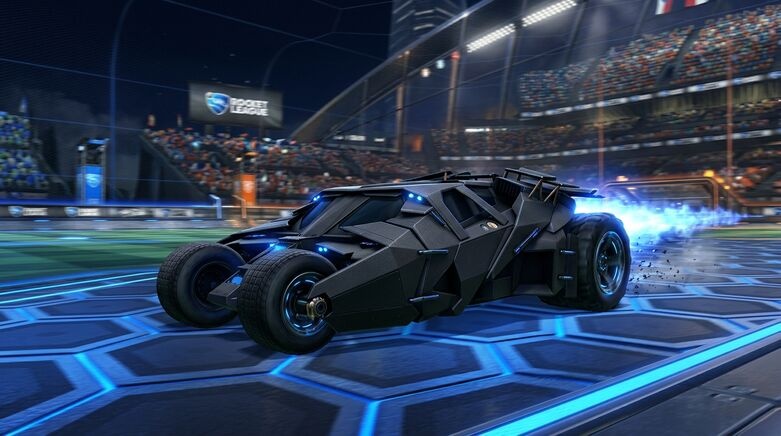
The Plank hitbox also has a unique advantage for post-play: its width and low height allow extremely versatile ball control and direction changes on the ground. The further back the ball is on the Plank hitbox, the more powerful your flick will be — it is much more difficult to gain the same power on a shorter car such as the Octane.
The critical weakness is that flat height. In 50/50 challenges against taller cars, the Batmobile loses far more often than it wins. It also has a legacy hitbox — the 2016 Batmobile keeps its original unique hitbox rather than the standardised Plank, which is why it’s kept as a premium item. The 2016 Batmobile kept its original hitbox at pro players’ request.
Hitbox: Plank | How to get: Item Shop (premium — DC crossover) | Best for: Defensive play, ceiling shots, flat aerial shots
7. Mantis — The Underrated Plank
The Mantis shares the Plank hitbox with Batmobile but at a more accessible price point. Its elongated design gives the same flat low-profile advantages — great for defending large areas of the goal, impressive turn radius for a long car, and excellent ball control for ground-based offensive players who want reach without the Dominus’s height limitations.

It’s genuinely underrated in the community. Players who take the time to learn the Plank hitbox’s quirks often stick with Mantis for years — the consistency of flat ball contact rewards the investment.
Hitbox: Plank | How to get: Item Shop (credits), Nitro Crate drops, trading | Best for: Defensive play, Plank hitbox learners
8. Fennec-Style Alternative — Takumi
Takumi and Takumi RX-T use the Octane hitbox with a JDM sports car aesthetic. They play identically to Octane and Fennec — same hitbox, same feel. The visual model doesn’t align quite as precisely as Fennec but for players who’ve fallen in love with the Takumi design and want Octane hitbox gameplay, it’s a completely legitimate pick. Consider it a style choice within the meta.
Hitbox: Octane | How to get: Item Shop (credits), trading | Best for: Octane hitbox players who want a different look
C-Tier — Off-Meta Choices
9. Merc — The Disruption Tank
The Merc hitbox is the only one added after the 2017 standardisation — taller than every other hitbox at 41.66 height but narrower at 76.71 width. The Merc is Rocket League’s tank or barbarian-class vehicle — a big dumb brick that excels at disruption and chaos. That extra height makes 50/50 wins more likely in some situations but the narrow width makes aerials significantly harder to control.
The Merc is off-meta for good reason — it has significant disadvantages in aerial play that never fully go away. But for players who exclusively play defensively and want every edge in ground challenges, it’s a legitimate niche choice.
Hitbox: Merc | How to get: Item Shop (credits), trading | Best for: Disruption-focused defensive play only
10. Marauder — The Honest Octane Clone
Marauder uses the Octane hitbox. It plays identically to Octane. The military humvee design is bulkier and harder to read during play but mechanically there’s nothing wrong with it. If you love the aesthetic and want Octane performance, Marauder delivers. It just isn’t the best visual representation of the hitbox you’re using.
Hitbox: Octane | How to get: Item Shop, DLC | Best for: Octane hitbox with a different visual style
What the Pros Are Actually Using — RLCS 2025 World Championship Data
Numbers speak louder than opinions. Here’s what professional Rocket League players actually drove at the highest level in 2025:
| Car | Hitbox | Pro Usage % | Notable Pro Players |
|---|---|---|---|
| Octane | Octane | ~55% | BeastMode (NRG — 2025 World Champion) |
| Fennec | Octane | ~35% | Daniel (NRG), Atomic (NRG), Team BDS stars |
| Dominus | Dominus | ~8% | Flick specialists and ground-focused players |
| Other | Various | ~2% | Specialist players in specific team roles |
NRG claimed the 2025 World Championship with Atomic, BeastMode, and Daniel all using Octane hitbox cars. BeastMode favored the classic Octane for mechanical freedom while Daniel and Atomic relied on the Fennec for consistency. Over 90% of professional players at the highest level use Octane hitbox cars. That’s not a coincidence.
Which Car Should You Actually Use?
Honestly? Start with Octane. Here’s the simple reasoning — if the best players in the world overwhelmingly use it, and it’s free, and the hitbox is the most forgiving and versatile in the game, there’s genuinely no reason to start elsewhere.
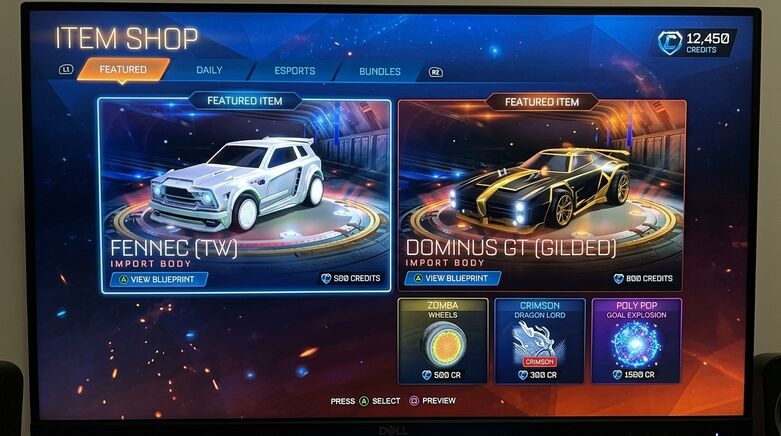
If you’ve been playing for a while and want to try Fennec, go for it. The visual clarity advantage is real and many players find it genuinely helps with ball contact consistency. But if you’re switching from Octane to Fennec and your game doesn’t improve within a week, the car isn’t the problem.
The one scenario where a different hitbox actually makes sense is if you’ve genuinely committed to a specific playstyle. Dominus flick mechanics reward players who build their entire game around ground-based power shots. Plank hitbox players who love ceiling shots and flat aerials will find Batmobile or Mantis rewards that investment. But these are intentional specialisations — not beginner choices.
| Your Situation | Recommended Car | Why |
|---|---|---|
| New player just starting out | Octane | Free, best hitbox, most tutorials use it, forgives mistakes |
| Want better visual feedback | Fennec | Same hitbox as Octane — cleaner visual alignment |
| Building a flick-heavy game | Dominus | Longer body, flatter roof — significantly better for flick mechanics |
| Ceiling shots and freestyling | Batmobile or Mantis | Plank hitbox excels in flat aerial and precision techniques |
| Want Octane feel with style | Fennec or Takumi | Same hitbox — different aesthetics |
| Advanced aerial mechanics | Endo | Hybrid hitbox creates more consistent flip reset contact |
New Cars in 2026 — Season 21 Additions
Season 21’s Pursuit in Paris update introduced several new vehicles worth knowing about. The Corlay uses the Octane hitbox but suffers from a rounded roofline that makes dribbling inconsistent. The Magnifique and Magnifique GXT use the Dominus hitbox with slightly bulkier visual bodies, potentially bridging the gap between Dominus aggression and Octane stability. Early competitive testing shows promise but no major meta shift yet.
The BMW M4 GT3 EVO and Aston Martin Valhalla also arrived through cross-game integration. Both use Dominus hitboxes but their complex visual geometry — spoilers, diffusers, wide body kits — makes them harder to read during play. Fine for casual games, less ideal for ranked where clarity matters.
Bottom line: none of the Season 21 additions have shifted the meta. Octane and Fennec remain the dominant competitive picks heading into mid-2026.
Conclusion
The best car in Rocket League in 2026 is Octane. The second best is Fennec. They share the same hitbox and they’re used by over 90% of the best players in the world. Everything else is specialisation.
Pick Octane to start — it’s free, it’s forgiving, and it’s genuinely the best choice for developing mechanics at every rank. Once you know what kind of player you’re becoming, branch into Fennec for visual clarity, Dominus for flick power, or a Plank hitbox car for ceiling and precision work. But don’t jump to anything else before you’ve genuinely maxed out what Octane can teach you.
- Best overall: Octane — free, meta, the world’s best play it
- Best alternative: Fennec — same hitbox, better visual alignment
- Best for flicks: Dominus — longer and flatter, built for power shots
- Best for ceiling shots: Batmobile or Mantis — Plank hitbox flatness wins here
- The truth about cars: After Octane/Fennec, it’s about hitbox preference not magic stats
FAQ
What is the best car in Rocket League in 2026?
Octane is the best car in Rocket League in 2026. It’s been the dominant meta pick since competitive play began and remains the choice of over 55% of professional players. It’s also a free default car available from the very start of the game, making it the best value choice at every rank level.
Is Fennec better than Octane in Rocket League?
Fennec and Octane share the exact same hitbox — they perform identically on paper. The difference is visual: Fennec’s blockier shape aligns more precisely with the actual hitbox geometry, which many players find makes ball contact easier to judge. For most players the choice is personal preference. For visual clarity specifically, Fennec has a genuine edge.
What hitboxes are in Rocket League?
There are six hitboxes in Rocket League: Octane (tallest, most versatile), Dominus (longer and flatter, great for flicks), Breakout (longest hitbox, best for power shots and pinches), Hybrid (between Octane and Dominus, good for flip resets), Plank (widest and flattest, best for ceiling shots), and Merc (tallest but narrowest — disruption-focused). All cars in the game use one of these six hitboxes.
What car do most pro Rocket League players use?
Over 90% of professional Rocket League players use Octane hitbox cars — specifically Octane and Fennec. At the 2025 RLCS World Championship, NRG’s BeastMode used Octane while teammates Daniel and Atomic used Fennec. Dominus accounts for roughly 8% of pro usage. All other hitboxes combined make up approximately 2%.
What is the best Rocket League car for beginners?
Octane is the best Rocket League car for beginners. It’s free, uses the most forgiving hitbox in the game, has the largest community of tutorials and guides built around it, and is identical to what the best players in the world use. There’s no reason to learn the game on anything else first.