

TFT Set 18: Enchanted Wilds introduces Wisps, a brand-new shop mechanic that turns every planning phase into a genuine decision. If you’re returning after a break or jumping in fresh, Wisps are the one thing you need to understand before the set goes live, because they change how you spend gold on almost every round. The good news: the concept is simple. The skill is knowing when a Wisp is actually worth buying, and that’s where most players get it wrong. Here’s everything explained, plus the one rule that separates good Wisp decisions from bad ones.

Quick answer: Wisps are TFT Set 18’s new mechanic — single-use shop boosts that appear in the rightmost shop slot on every other shop during the planning phase. You can buy one per round, they come in seven categories (Champion, Combat, Gold/XP, Item, Misc, Risky, and Shop), and they get stronger and more expensive as the game goes on. From Stage 5 onward, every other Wisp is a guaranteed Combat Wisp. They’re a reworked version of the Charms mechanic from Set 12, and Enchanted Wilds goes live on August 26, 2026 with Patch 18.1.
A new set means a fresh rank reset and a meta nobody’s solved yet — the perfect time to climb before everyone learns the mechanic. Our TFT boosting service gets you to your target rank fast with pro players who already know how to squeeze value out of Wisps, so you climb Enchanted Wilds while the ladder’s still figuring it out.
Related Guides:
- Teamfight Tactics Beginner’s Guide — Learn the Fundamentals
- TFT Leveling & Economy Guide — When to Spend Your Gold
What Are Wisps? (The Basics)
A Wisp is a one-time shop purchase that gives you a single burst of value and then is spent. Instead of buying a champion from a shop slot, you sometimes buy a magical helper that hands you gold, a unit, a combat buff, an item component, or a high-risk gamble. Once it’s used, it’s gone — there’s no keeping a Wisp on your board like a champion.



Thematically they fit Enchanted Wilds perfectly: this is a nature-and-magic set built around a mystical forest, and Wisps are the little sparks of magic drifting through your shop. Mechanically, though, they’re a serious strategic layer. Every Wisp that appears is a question — spend gold on this boost now, or save and keep your economy rolling? That question repeats all game, which is what makes Wisps the defining skill of the set.
How Wisps Work — Where, When & the One-Per-Round Rule
Here’s the mechanic in full, because the details matter for using them well:
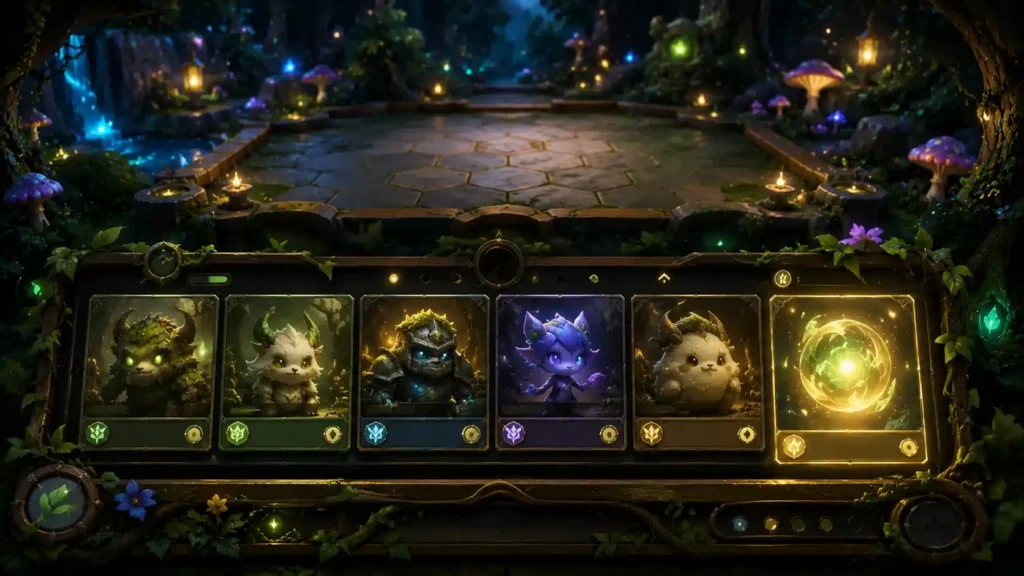
- Where they appear: the rightmost slot of your shop, showing up in every other shop during the planning phase.
- How many you get: you can buy just one Wisp per round.
- The skip bonus: once you buy a Wisp — or once the planning phase ends — the remaining Wisps vanish, and the champion unit hidden behind that slot is revealed. So even if you skip buying, you get a free scout of a fifth unit.
- Scaling: Wisp effects grow stronger and more expensive as the game progresses, with costs ranging from 0 gold up past 45 depending on the game stage.
- The Stage 5 rule: from Stage 5 onward, every other Wisp becomes a guaranteed Combat Wisp, giving everyone reliable access to fight-affecting boosts in the late game.
Some Wisps are conditional — they only appear when a specific trait is active or a condition is met (for example, a Wisp that requires you to be fielding a certain unit type, or one that only shows up once you hit a particular level). That means your board can actually influence which Wisps you’re offered, adding another layer to how you build.
The 7 Wisp Categories Explained
Every Wisp falls into one of seven categories. Knowing what each does helps you instantly read whether a Wisp fits your game plan:
| Category | What It Does |
|---|---|
| Champion | Grants units — free champions, specific-cost units, or upgrades |
| Combat | Direct fight buffs — damage, stats, or in-combat effects |
| Gold / XP | Economy boosts — bonus gold or experience to level faster |
| Item | Item components, anvils, or completed items |
| Misc | Utility effects that don’t fit the other buckets |
| Risky | High-risk, high-reward gambles with a downside or chance element |
| Shop | Reroll effects, shop odds, or store manipulation |
The category tells you the type of value, but not whether it’s worth the price — a cheap Gold Wisp early can snowball your economy, while a pricey Risky Wisp might win or lose you the game. That judgment is the real skill, and it comes down to one thing we’ll cover in a moment.
Wisps vs Charms — What’s Different?
If you played Set 12: Magic n’ Mayhem, Wisps will feel familiar — they’re a direct rework of that set’s Charms mechanic. But Riot didn’t just re-skin them; they fixed the parts players disliked. Here’s what changed:
- Buy during planning only. Wisps are purchased in the planning phase and disappear during combat, rather than lingering and cluttering decisions mid-fight.
- The hidden unit is revealed. When Wisps vanish, the champion behind the slot appears — so a Wisp slot never fully costs you a look at the shop. That free scout is new.
- Guaranteed late-game Combat Wisps. The Stage 5 rule ensures everyone gets reliable combat boosts down the stretch, keeping the field level rather than letting Wisp luck decide games.
- Seven defined categories. The system is more structured than Charms were, making it easier to read what you’re being offered at a glance.
The community reception on PBE has been largely positive precisely because of these quality-of-life fixes — returning players get the fun of Charms without the frustrations that came with the original version.
Should You Buy a Wisp? The Gold-Interest Tradeoff
This is the part almost every Wisp guide skips, and it’s the single most important concept for actually climbing with them. Here’s the trap: a Wisp looks free, but it costs gold — and in TFT, gold isn’t just currency, it earns interest.
TFT pays you 1 bonus gold for every 10 you have banked, with interest breakpoints at 10, 20, 30, 40, and 50 gold. So if you’re sitting on exactly 30 gold and you spend 3 gold on a Wisp, you don’t just lose 3 gold — you drop below the 30 breakpoint and lose 1 gold of interest every single round until you climb back. Over several rounds, that “cheap” 3-gold Wisp can quietly cost you far more.
So the real question is never simply “is this Wisp good?” It’s “is this Wisp worth the gold plus the interest I’d give up?” A practical rule of thumb:
- Buying above a breakpoint? If spending on the Wisp keeps you above your current interest tier (or the Wisp is 0 gold), it’s a much easier yes.
- Buying would drop you below a breakpoint? The Wisp needs to be genuinely impactful — a strong econ boost, a unit you need, or a fight-winning combat buff — to justify losing interest. A minor utility Wisp usually isn’t worth it.
- Late game, gold matters less. By Stage 5+ when you’re often spending down anyway, Combat Wisps become far more worth taking, since preserving interest is no longer the priority.
Master this one tradeoff and you’ll make better Wisp decisions than most of the lobby — because they’re clicking Wisps that feel good while quietly bleeding economy, and you’re not. If the gold-and-interest system is new to you, our TFT economy guide breaks down the breakpoints in full.
The Blossom Trait — Building Around Wisps
If you love the Wisp mechanic, there’s a whole trait built around it: Blossom. This is the Wisp-focused vertical, and stacking it turns Wisps from an occasional bonus into your core engine. As you activate more Blossom breakpoints, it does things like upgrade the Wisps you’re offered, add Wisps to more of your shops, pay you gold for buying them, and eventually let you purchase two Wisps per round instead of one.
Blossom flips the gold-interest math entirely — when the trait is paying you back for buying Wisps, the tradeoff calculation shifts in favor of spending. It’s a genuinely different way to play the set, and one of the most rewarding lines for players who want to lean all the way into the new mechanic.
When Does TFT Set 18 Go Live?
TFT Set 18: Enchanted Wilds launches on live servers on Wednesday, August 26, 2026, with Patch 18.1. The set has been playable on the PBE (Public Beta Environment) since July 28, giving players a four-week testing window — longer than the usual two weeks, because Set 18 also marks TFT’s major transition to the Unreal Engine.
One important note while the set is on PBE: everything is subject to change. Riot has been explicit that Wisp effects, costs, trait breakpoints, and champion numbers are all still being tuned and may shift before the August 26 launch. Treat any specific Wisp values you see right now as provisional — the categories and core rules are locked, but the fine details will settle when the set goes live. Because of the engine move, it’s also worth expecting some launch-window rough edges as Riot irons out the transition.
Climb Enchanted Wilds From Day One
A brand-new mechanic plus a ranked reset is the ideal climbing window — the players who understand Wisps and their gold tradeoff early will rise before the rest of the ladder catches up. Learn the mechanic, respect your interest breakpoints, and you’re already ahead of most of your lobby.
For more TFT guides, set breakdowns, and climbing tips across every patch, dive into our latest gaming guides and updates.
Conclusion
Wisps are TFT Set 18’s defining mechanic, and they’re refreshingly simple to understand: single-use shop boosts in the rightmost slot, one per round, seven categories, scaling up as the game goes on, with guaranteed Combat Wisps from Stage 5. They’re the Charms mechanic reborn with all the right quality-of-life fixes. But the real skill isn’t knowing what Wisps are — it’s knowing when to buy one, and that always comes back to the gold-and-interest tradeoff. A Wisp is never truly free.
Enchanted Wilds goes live August 26, 2026. Learn the categories, master the tradeoff, and consider going deep on Blossom if the mechanic clicks for you. Do that, and you’ll be climbing the new set while everyone else is still clicking Wisps they can’t afford. See you in the forest.
Frequently Asked Questions
What are Wisps in TFT Set 18?
Wisps are the new mechanic in TFT Set 18: Enchanted Wilds — single-use shop boosts that appear in the rightmost shop slot on every other shop during the planning phase. You can buy one per round, and they grant effects across seven categories (champions, combat buffs, gold, XP, items, utility, and gambles). They get stronger and more expensive as the game goes on, and they’re a reworked version of the Charms mechanic from Set 12.
Are Wisps the same as Charms from Set 12?
Wisps are a rework of the Charms mechanic from Set 12: Magic n’ Mayhem, so they’ll feel familiar, but they have key differences. Wisps are bought only during the planning phase and disappear in combat, the champion hidden behind the Wisp slot is revealed when they vanish (giving you a free scout), and from Stage 5 every other Wisp is a guaranteed Combat Wisp. They’re also organized into seven defined categories, making the system more structured than Charms were.
How many Wisp categories are there?
There are seven Wisp categories in TFT Set 18: Champion (units), Combat (fight buffs), Gold/XP (economy), Item (components and anvils), Misc (utility), Risky (high-risk gambles), and Shop (reroll and store effects). Each category tells you the type of value a Wisp offers, though whether it’s worth buying depends on its cost relative to your gold interest.
When do Combat Wisps appear in TFT Set 18?
From Stage 5 onward, every other Wisp is a guaranteed Combat Wisp. This ensures all players get reliable access to fight-affecting boosts in the late game, keeping the field level rather than letting Wisp luck decide close games. Before Stage 5, Wisps are drawn from any of the seven categories.
Should you buy Wisps in TFT?
Only when the value beats the cost — and the cost includes lost gold interest. TFT pays 1 gold per 10 banked, with breakpoints at 10, 20, 30, 40, and 50. If buying a Wisp drops you below a breakpoint, it needs to be genuinely impactful (a strong econ boost, a needed unit, or a fight-winning combat buff) to be worth it. A minor Wisp that costs you interest every round usually isn’t worth buying, especially in the early and mid game.
When does TFT Set 18 go live?
TFT Set 18: Enchanted Wilds launches on live servers on August 26, 2026, with Patch 18.1. It has been on the PBE test client since July 28, 2026, with an extended four-week testing window due to TFT’s transition to the Unreal Engine. Wisp effects and costs are still being tuned during PBE and may change before the live launch.